


Posted by Sarah Mitchell
on March 07, 2024
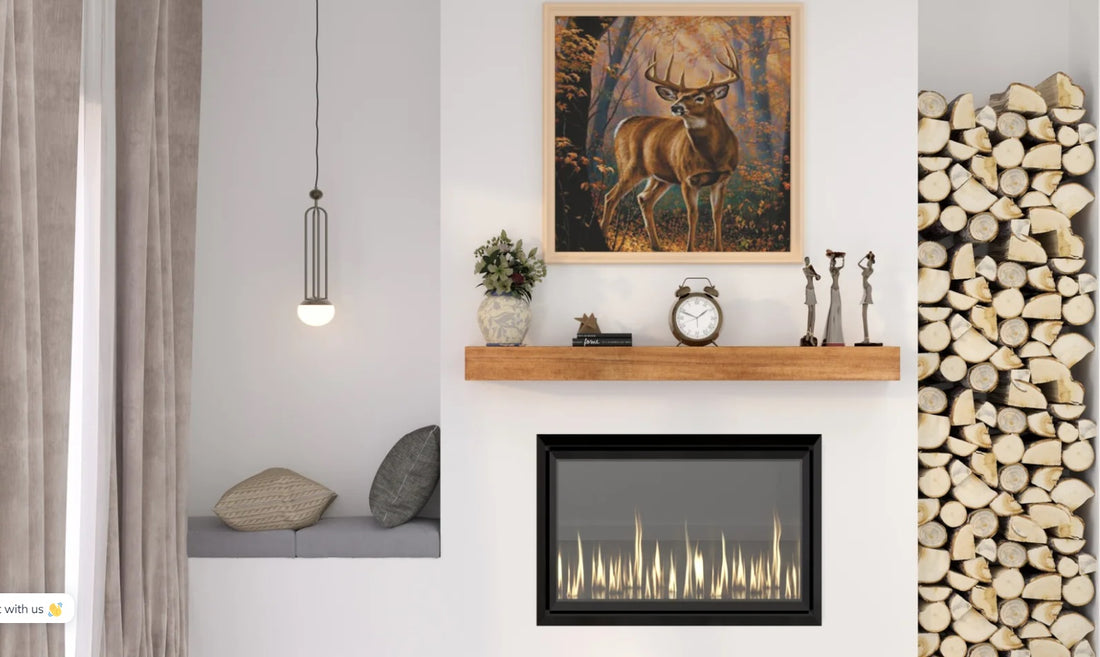
The most reliable mantel styling formula is odd-number groupings with varied heights, one dominant focal point (mirror, artwork, or large plant), and layering that extends slightly beyond the shelf edge. Aim for asymmetry rather than perfect symmetry — symmetrical mantels look formal; asymmetrical ones look curated.
Start With a Focal Point
Every well-styled mantel has one dominant element that anchors everything else. The three most common choices are:
- Mirror — reflects light, makes the room feel larger, works in every style. A leaning mirror that extends above the shelf is especially impactful. Width should be roughly half to two-thirds of the mantel shelf width.
- Artwork — a large single piece or a simple grouping. Landscape and abstract work particularly well above a fireplace. Frame it, do not lean multiple pieces — the fireplace is already busy enough visually.
- Architectural element — a salvaged window frame, a large round clock, an oversized botanical print. Works best in farmhouse and eclectic spaces.
Choose one and commit to it. The rest of the styling builds around it.
The Rule of Thirds and Odd Numbers
Once you have your focal point, arrange supporting items in groups of three or five rather than pairs. Pairs look formal and planned; odd groupings look collected. Within each grouping, vary the height significantly — a tall candlestick next to a medium vase next to a small sculpture reads as intentional. Three items the same height read as a product display.
Divide the mantel shelf mentally into thirds. Your focal point typically occupies the center third. The left and right thirds get your groupings. You do not need to fill every inch — negative space is part of the design.
Vary Texture and Material
A mantel styled entirely in one material — all ceramic, all wood, all glass — looks flat. Combine three to four different textures:
- Something with weight: ceramic, stone, concrete
- Something organic: a plant, dried botanicals, wood slice, woven basket
- Something that catches light: glass, brass, mirror, a candle flame
- Something soft or matte: linen, a book with a muted cover, a felt-wrapped object
This combination gives the eye somewhere to travel rather than sliding right past.
Mantel Decor by Style
Modern Farmhouse
Stick to a neutral palette — white, cream, warm gray, black. Layer in organic textures: a terracotta pot, raw wood tray, dried pampas grass or eucalyptus, a simple cotton or linen wreath. A shiplap-backed fireplace surround or a reclaimed wood mantel amplifies the aesthetic. Keep the arrangement loose and slightly asymmetrical. For a deeper dive, see our guide to integrating modern farmhouse style with your mantel.
Traditional
Symmetry works here — matched candlesticks flanking a central clock or mirror is a classic traditional arrangement. Introduce warmth with gilded frames, ceramic ginger jars, or a pair of small topiaries. A painted or detailed wood mantel with pilasters and crown molding fits the style better than a minimalist shelf.
Modern / Minimalist
Less is more. Choose one or two objects with strong silhouettes — a single large vase, a sculptural object, or one piece of meaningful artwork. Eliminate clutter ruthlessly. The mantel itself should be clean-lined; a floating beam or simple box profile works better than an ornate surround. Monochromatic arrangements (all white, or all natural wood tones) read as intentional in a minimalist context.
Eclectic
The most forgiving style to pull off because the whole point is that it looks collected over time. Mix metals, mix frames, mix eras. The constraint that holds it together is color — keep the overall palette to 2-3 tones even if the objects are wildly different. A vintage clock, a few travel objects, some architectural fragments, a plant — this is where personality shows.
Seasonal Swaps Without Starting Over
A smart base layer — mirror or artwork, a plant or botanical, one or two anchor objects — stays up all year. What changes seasonally is everything around it:
- Spring: Light and fresh — white or green botanicals and fresh stems in a vase, linen textures, driftwood or light wood accents, simple white candles, a bird or butterfly object, airy art in light frames.
- Summer: Coastal and bright — shells, driftwood, and other woven or beach-inspired textures, brighter accent colors, minimal clutter to keep the display feeling breezy.
- Fall: Warm and textured — dried pampas grass or wheat, amber and terracotta tones, antique brass candlesticks, vintage books, gourds or dried orange slices, a chunky candle.
- Winter / Holidays: Layered and cozy — evergreen garland or eucalyptus, pinecones, pillar candles in varying heights, fairy lights tucked into the greenery, ornaments in a bowl, small wrapped objects, and a classic wreath leaned against the anchor piece.
Keep a small bin of seasonal swap items so the refresh takes 10 minutes rather than an hour of sourcing.
Common Mantel Decorating Mistakes
- Cluttering the shelf edge: Items right at the front edge look like they are about to fall. Pull things back and let the shelf profile show.
- All the same height: Every item at 8 inches looks like a store shelf. Vary from 4 to 24 inches within a grouping.
- Too many things competing for attention: If everything is bold, nothing is. One dominant piece, the rest supporting.
- Ignoring the space above the shelf: A bare wall above a well-styled mantel shelf looks unfinished. A mirror, artwork, or architectural element completes the vignette.
- Perfectly centered symmetry: Works in formal traditional rooms. In most spaces it reads as stiff. Try an asymmetrical arrangement first.
The Mantel Itself Matters
Even the best styling cannot overcome a mantel that does not fit the room. A chunky reclaimed beam reads as heavy and warm. A painted box-profile shelf reads as clean and modern. A detailed surround with pilasters and crown molding reads as classic. If the styling feels off no matter what you try, the issue may be the mantel profile rather than the objects on it. Our guide to choosing a mantel by size, style, and material can help you get the foundation right, and you can browse mantel design ideas for every interior style for inspiration.
Dogberry Collections makes real wood fireplace mantels in styles from rustic to modern — each one handcrafted and finished before it ships. Browse the full collection to find one that fits your space and your aesthetic.
Frequently Asked Questions
How do you style a fireplace mantel?
Start with one dominant focal point — a mirror, artwork, or large architectural element — then build odd-number groupings of varied heights on either side. Mix textures (ceramic, organic, glass, matte) and leave some negative space. Asymmetry looks more curated than perfect symmetry in most styles.
What do you put on a mantel above a fireplace?
A mirror or large piece of artwork is the most common anchor. Layering in plants or botanicals, candles, small sculptures, books, and framed photos in odd-number groupings at varied heights creates a finished look. What you choose depends on your style — minimalist rooms do well with one or two strong objects; eclectic rooms can hold more.
How do I make my mantel look good year-round?
Keep a base layer of permanent items — a mirror or artwork, a plant or botanical, one or two anchor objects — and swap only the seasonal accents (garland, stems, seasonal objects). This makes seasonal refreshes fast and keeps the mantel from looking completely redone four times a year.
What size mirror should go above a fireplace mantel?
A mirror above a mantel should be roughly half to two-thirds the width of the mantel shelf. If your shelf is 60 inches, a 30-to-42-inch mirror is appropriate. Going too wide makes it feel like it is trying to be the fireplace surround; too narrow gets lost on the wall.
Should mantel decor be symmetrical or asymmetrical?
Asymmetrical arrangements look more collected and modern in most spaces. Symmetry works well in formal traditional rooms — matched candlesticks flanking a central clock or mirror is a classic arrangement. For most homes, start asymmetrical and adjust from there.
